
On Wild Card, well-known guests answer the kinds of questions we often think about but don't talk about. Actor and author Nick Offerman reflects on a place that shaped him.

Ian Maule/AFP via Getty Images, Alex Brandon/AP

Jennifer Teresa Villanueva
-
 KnopfJulie Orringer's new novel is a multivalent love story, a tale of sickness and health, dementia and brilliance, betrayal and loyalty. It's both heartbreaking and heartwarming.
 -
 CrownAs polar ice melts in the Arctic, shipping lanes are opening up, making the region a new zone of superpower competition. Writer Rana Foroohar explains the stakes in Sea Change.


-
The Two Saddest Kitchens is a comic conversation between Roz Chast and Jason Adam Katzenstein. Book critic Maureen Corrigan says it made her laugh and feel better about her own (lack of) cooking.
-
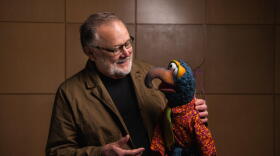 "The Muppet Show" debuted 50 years ago, featuring a couple characters from the already-famous "Sesame Street."
 -
 We got to play The Legend of Zelda: Ocarina of Time early. Here are our impressions of the remake and its elaborate new style.
 -
 Li won a Pulitzer for her memoir about the suicides of her two sons. In her new novel, Music Against the Night, she writes about two young prodigies in the late 18th and early 19th centuries.
 -
The longest scientific study of happiness began in 1938 and is still going, now tracking multiple generations.
-
 Laufey sees libraries as an important third space at a time when younger generations are yearning for something that feels physical and nostalgic.
 -
Some big challenges remain, like getting the trail across the Ohio River between West Virginia and Ohio.
-
The Native American and Alaska Native students died while attending the Carlisle Indian Industrial School in Pennsylvania more than a century ago.
-
 Actor and disability rights advocate RJ Mitte, who brought a lifetime of experience with cerebral palsy to fictional family struggles in an essential role on "Breaking Bad," died Monday at age 34.
 -
 Authorities say Blair was physically abusive and injured two flight attendants while traveling from Los Angeles to New York. A Blair representative said she had a medical emergency aboard the plane.


